Buy eprivacy-verordnung.eu ?
We are moving the project
eprivacy-verordnung.eu .
Are you interested in purchasing the domain
eprivacy-verordnung.eu ?
domain@kv-gmbh.de · 0541-91531010
Buy eprivacy-verordnung.eu ?
Have our exoplanets already been studied?
Yes, exoplanets have been extensively studied by astronomers using various methods such as transit photometry, radial velocity measurements, and direct imaging. These studies have provided valuable insights into the characteristics of exoplanets, such as their size, composition, and orbit. Additionally, ongoing and future missions, such as the James Webb Space Telescope, will continue to expand our knowledge of exoplanets and their potential for hosting life. **
Have our exoplanets already been investigated?
Yes, exoplanets have been extensively investigated by astronomers using various methods such as the transit method, radial velocity method, and direct imaging. These investigations have revealed a wide range of exoplanets with different sizes, compositions, and orbital characteristics. Scientists continue to study exoplanets to better understand their formation, evolution, and potential for hosting life. **


Similar search terms for Exoplanets
Top-Angebote
Products related to Exoplanets:
-
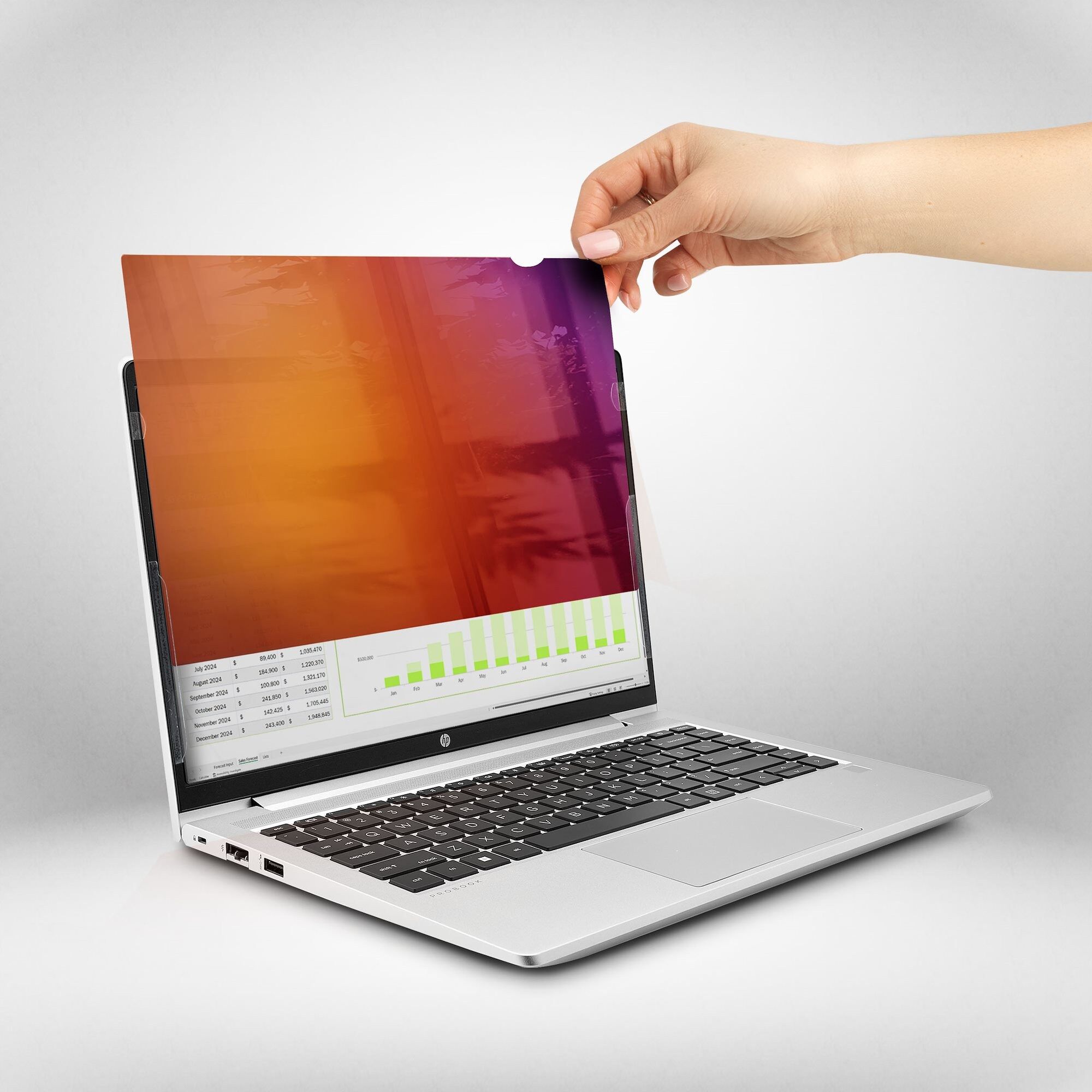
StarTech.com 14-inch 16:9 Laptop Privacy Screen, Reversible Gold Filter w/Enhanced Privacy, Computer Security Filter, Removable Screen Protector/ShielPrevent visual eavesdropping by limiting the viewing angle of your laptop screenThis Laptop Privacy Screen features a universal design compatible with 14-inch laptop screens with a 16:9 aspect ratio display. Gold Privacy Filters have a reflective surface that instantly transitions from a clear view to a mirror effect outside of the intended viewing angle, significantly improving visual privacy when working in an office or public environment.Prevent Visual EavesdroppingThe gold security filter is a convenient solution that features a quick shift to a mirror-like effect to protect confidential data from unwanted viewers while maintaining a clear view of 60 degrees (+/- 30 degrees from the center) for the user.Reversible FilterThe privacy filter's removable and reversible design allows users to effortlessly switch between a glossy gold side for maximum privacy and an anti-glare matte side for environments prone to glare. The matte side provides additional screen protection with a scratch- and fingerprint-resistant coating.Hassle-free InstallationThe universal design won't interfere with top-mounted webcams, sensors, or when closing the lid. The privacy filter can be installed in two different ways. Affix the privacy shield to bezel-less displays using the transparent and residue-free adhesive strips. Alternatively, use the slide mount tabs to install the privacy screen on displays with bezels. The latter is recommended when frequent reversal or removal is required.Blue Light ReductionReduce eye strain and improve visual comfort with this blue light-reducing privacy shield. It blocks 40% - 51% of the blue light emitted from the display in the 380nm - 480nm wavelength range. Digital eye strain can lead to symptoms like headaches, dry eyes, and blurred vision.The StarTech.com Advantage48,99 £*Shipping: 0,00 £Secure redirect to the provider
-
HP Ultrium 6 LTO Data Cartridge PurpleLTO Ultrium 6 data cartridge with 6.25 TB compressed capacity and 846 m tape length, featuring Metal Particle technology for reliable long-term data storage. Compatible with HP StoreEver and MSL library systems. Includes write-on labels and comes with a limited lifetime warranty.66,49 £*Shipping: 0,00 £Secure redirect to the provider



-
Have our exoplanets already been examined?
Yes, exoplanets have been examined by astronomers using various methods such as the transit method, radial velocity method, and direct imaging. These methods have allowed scientists to gather information about the size, composition, atmosphere, and potential habitability of exoplanets. Additionally, ongoing and future missions, such as the James Webb Space Telescope, will continue to study exoplanets in more detail. **
-
Why do exoplanets not have names yet?
Exoplanets do not have official names yet because the International Astronomical Union (IAU) is responsible for naming celestial bodies, and they have not yet established a formal naming process for exoplanets. Additionally, there are thousands of exoplanets that have been discovered, and it would be a complex and time-consuming task to come up with unique and meaningful names for each one. For now, exoplanets are typically referred to by a combination of letters and numbers based on the star they orbit, such as "Kepler-186f" or "TRAPPIST-1e." **
-
Have moons of exoplanets ever been discovered?
Yes, moons of exoplanets have been discovered. One example is the exomoon candidate Kepler-1625b I, which was detected in 2018 using data from the Kepler Space Telescope. This discovery suggests that exomoons may be more common than previously thought, and it opens up the possibility of finding even more moons around exoplanets in the future. The study of exomoons is an exciting area of research that could provide valuable insights into the formation and evolution of planetary systems beyond our own. **
-
How do people travel to other exoplanets?
Currently, people do not travel to other exoplanets. The distances to exoplanets are so vast that it would take thousands of years using current technology to reach even the closest ones. Additionally, we have not yet developed the technology to sustain human life for such long journeys. However, there is ongoing research and development into advanced propulsion systems, life support systems, and spacecraft design that may one day make interstellar travel a possibility. **


Why is the question about exoplanets so interesting?
The question about exoplanets is so interesting because it has the potential to expand our understanding of the universe and our place within it. Discovering and studying exoplanets can provide insights into the formation and evolution of planetary systems, as well as the potential for life beyond Earth. Additionally, the search for exoplanets pushes the boundaries of technology and observational techniques, driving advancements in astronomy and space exploration. Ultimately, the study of exoplanets has the potential to answer fundamental questions about the nature of the cosmos and our place in it. **
Can the James Webb Telescope take pictures of exoplanets?
Yes, the James Webb Telescope has the capability to take pictures of exoplanets. It is equipped with a specialized instrument called the Near Infrared Camera (NIRCam) that is designed to capture images of distant planets orbiting other stars. By using its advanced technology and positioning, the telescope will be able to observe and photograph exoplanets, providing valuable insights into their atmospheres and potential habitability. **
Top-Angebote
Products related to Exoplanets:
-
United Charger & Smartwatch Data Cable Replacement Charger & Smartwatch Data Cable ReplacementKeep your Garmin 920XT charger ready whenever adventure calls. Designed for athletes, runners, and fitness enthusiasts, this replacement charger ensures your Forerunner 920XT stays powered and connected. Its durable smartwatch charging cable offers...39,97 $*Shipping: 0,00 $Secure redirect to the provider
-
EaseUS Data Recovery Wizard 18 ProEaseUS Partition Master 18.0 Professional is a powerful and versatile tool for partition management on Windows systems. Designed for home and professional users, this software offers a range of advanced features to optimise hard disk usage and improve system performance. Key Features Complete Partition Management: Create, resize, move, merge, delete and hide partitions with ease. EaseUS Partition Master allows you to manage partitions without data loss, ensuring a smooth and secure experience. Disk Cloning: Clone entire disks or individual partitions to easily transfer data from one drive to another. This function is especially useful when upgrading to new hard disks or SSDs. Partition Recovery: Recovers partitions lost or damaged as a result of accidental deletions, Windows upgrades or virus attacks. The recovery function is quick and easy, allowing data to be restored in just a few clicks. Performance Optimisation: Supports 4K alignment of SSD partitions to improve read and write performance, ensuring your system performs at its best. Advanced Conversion: Convert disks and partitions between MBR and GPT without formatting, making it easy to upgrade to Windows 11 and manage large disks. File System Check and Repair: Quickly checks the file system for errors and bad sectors, restoring disk functionality efficiently. Bootable Media Creation: Create WinPE bootable media to solve system boot problems or perform partition management tasks without booting Windows. Intuitive Interface: The user interface is designed to be simple and intuitive, making access to all features easy even for novice users. Why Choose EaseUS Partition Master 18.0 Professional? EaseUS Partition Master 18.0 Professional stands out for its combination of advanced functionality and ease of use. It is an ideal solution for anyone who wants to manage their disks effectively, whether they are home users or IT professionals. Competitively priced and with free updates for life, it is an excellent investment for optimising data management. Choose EaseUS Partition Master 18.0 Professional for stress-free partition management and to ensure that your system is always running at peak capacity. Don't let disk management become a hassle; trust EaseUS for a complete and reliable solution.55,90 £*Shipping: 0,00 £Secure redirect to the provider
-
StarTech.com 14-inch 16:9 Laptop Privacy Screen, Reversible Gold Filter w/Enhanced Privacy, Computer Security Filter, Removable Screen Protector/ShielPrevent visual eavesdropping by limiting the viewing angle of your laptop screenThis Laptop Privacy Screen features a universal design compatible with 14-inch laptop screens with a 16:9 aspect ratio display. Gold Privacy Filters have a reflective surface that instantly transitions from a clear view to a mirror effect outside of the intended viewing angle, significantly improving visual privacy when working in an office or public environment.Prevent Visual EavesdroppingThe gold security filter is a convenient solution that features a quick shift to a mirror-like effect to protect confidential data from unwanted viewers while maintaining a clear view of 60 degrees (+/- 30 degrees from the center) for the user.Reversible FilterThe privacy filter's removable and reversible design allows users to effortlessly switch between a glossy gold side for maximum privacy and an anti-glare matte side for environments prone to glare. The matte side provides additional screen protection with a scratch- and fingerprint-resistant coating.Hassle-free InstallationThe universal design won't interfere with top-mounted webcams, sensors, or when closing the lid. The privacy filter can be installed in two different ways. Affix the privacy shield to bezel-less displays using the transparent and residue-free adhesive strips. Alternatively, use the slide mount tabs to install the privacy screen on displays with bezels. The latter is recommended when frequent reversal or removal is required.Blue Light ReductionReduce eye strain and improve visual comfort with this blue light-reducing privacy shield. It blocks 40% - 51% of the blue light emitted from the display in the 380nm - 480nm wavelength range. Digital eye strain can lead to symptoms like headaches, dry eyes, and blurred vision.The StarTech.com Advantage48,99 £*Shipping: 0,00 £Secure redirect to the provider
-
Have our exoplanets already been studied?
Yes, exoplanets have been extensively studied by astronomers using various methods such as transit photometry, radial velocity measurements, and direct imaging. These studies have provided valuable insights into the characteristics of exoplanets, such as their size, composition, and orbit. Additionally, ongoing and future missions, such as the James Webb Space Telescope, will continue to expand our knowledge of exoplanets and their potential for hosting life. **
-
Have our exoplanets already been investigated?
Yes, exoplanets have been extensively investigated by astronomers using various methods such as the transit method, radial velocity method, and direct imaging. These investigations have revealed a wide range of exoplanets with different sizes, compositions, and orbital characteristics. Scientists continue to study exoplanets to better understand their formation, evolution, and potential for hosting life. **
-
Have our exoplanets already been examined?
Yes, exoplanets have been examined by astronomers using various methods such as the transit method, radial velocity method, and direct imaging. These methods have allowed scientists to gather information about the size, composition, atmosphere, and potential habitability of exoplanets. Additionally, ongoing and future missions, such as the James Webb Space Telescope, will continue to study exoplanets in more detail. **
-
Why do exoplanets not have names yet?
Exoplanets do not have official names yet because the International Astronomical Union (IAU) is responsible for naming celestial bodies, and they have not yet established a formal naming process for exoplanets. Additionally, there are thousands of exoplanets that have been discovered, and it would be a complex and time-consuming task to come up with unique and meaningful names for each one. For now, exoplanets are typically referred to by a combination of letters and numbers based on the star they orbit, such as "Kepler-186f" or "TRAPPIST-1e." **
Similar search terms for Exoplanets
-
HP Ultrium 6 LTO Data Cartridge PurpleLTO Ultrium 6 data cartridge with 6.25 TB compressed capacity and 846 m tape length, featuring Metal Particle technology for reliable long-term data storage. Compatible with HP StoreEver and MSL library systems. Includes write-on labels and comes with a limited lifetime warranty.66,49 £*Shipping: 0,00 £Secure redirect to the provider
-
Have moons of exoplanets ever been discovered?
Yes, moons of exoplanets have been discovered. One example is the exomoon candidate Kepler-1625b I, which was detected in 2018 using data from the Kepler Space Telescope. This discovery suggests that exomoons may be more common than previously thought, and it opens up the possibility of finding even more moons around exoplanets in the future. The study of exomoons is an exciting area of research that could provide valuable insights into the formation and evolution of planetary systems beyond our own. **
-
How do people travel to other exoplanets?
Currently, people do not travel to other exoplanets. The distances to exoplanets are so vast that it would take thousands of years using current technology to reach even the closest ones. Additionally, we have not yet developed the technology to sustain human life for such long journeys. However, there is ongoing research and development into advanced propulsion systems, life support systems, and spacecraft design that may one day make interstellar travel a possibility. **
-
Why is the question about exoplanets so interesting?
The question about exoplanets is so interesting because it has the potential to expand our understanding of the universe and our place within it. Discovering and studying exoplanets can provide insights into the formation and evolution of planetary systems, as well as the potential for life beyond Earth. Additionally, the search for exoplanets pushes the boundaries of technology and observational techniques, driving advancements in astronomy and space exploration. Ultimately, the study of exoplanets has the potential to answer fundamental questions about the nature of the cosmos and our place in it. **
-
Can the James Webb Telescope take pictures of exoplanets?
Yes, the James Webb Telescope has the capability to take pictures of exoplanets. It is equipped with a specialized instrument called the Near Infrared Camera (NIRCam) that is designed to capture images of distant planets orbiting other stars. By using its advanced technology and positioning, the telescope will be able to observe and photograph exoplanets, providing valuable insights into their atmospheres and potential habitability. **
* All prices are inclusive of VAT and, if applicable, plus shipping costs. The offer information is based on the details provided by the respective shop and is updated through automated processes. Real-time updates do not occur, so deviations can occur in individual cases. ** Note: Parts of this content were created by AI.